From archive to asset: Are rights holders undervaluing their content?

Sport is built on moments.
A winning goal. An impossible save. A comeback nobody saw coming.
We saw plenty of them at the World Cup this summer. From Vozinha’s goalkeeping heroics for Cape Verde to Ferran Torres’ tournament-winning goal and everything in-between, these were the water cooler moments which brought together casual and die-hard fans alike.
But their value didn’t disappear when the final whistle blew. Years from now, those same moments will still make fans stop scrolling, remember where they were and think about who they shared them with. That emotional connection gives great sporting moments a lifespan that extends far beyond the traditional matchday cycle.
For rights holders, that makes an archive much more than a record of what happened. It is an asset capable of generating attention, engagement and revenue long after the event itself has finished.
The question is: are rights holders extracting enough value from it?
Earlier this year Stats Perform launched Opta Pulse – an Opta-powered, AI-assisted video creation and distribution solution designed to help leagues, rights holders, broadcasters and digital teams produce high-quality sports highlights across owned, social and partner channels.
Find out more about Opta Pulse
In the second of two articles, Product Director Nick Pomeroy considers the value of historical video content to a rights holder and asks the question if more could be done to incorporate historical highlights into a wider content strategy.
You can revisit part one, which focuses on why speed matters to rights holders, here.
--------
Nostalgia in sport is big business.
Retro shirts are a staple of club shops, legends host VIP stadium experiences and club heritage sits front and centre of fan-focused engagement campaigns.
It is this power which makes archive sporting footage rich in potential for monetisation. As far back as 2018, Formula 1 introduced archive to its OTT subscription platform, F1TV, enabling fans to pay to watch highlights and full race re-runs going back over 50 years.
Football is increasingly moving in the same direction.
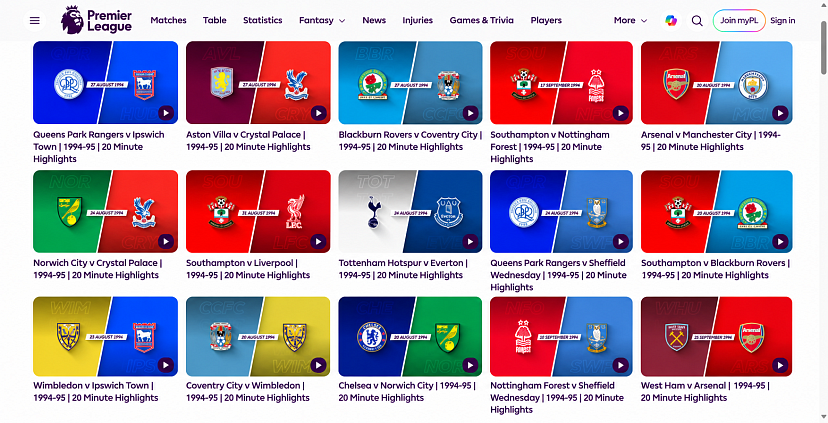
This year we have seen the Premier League make its entire match archive available to subscribers on its website. The podcast production company Goalhanger has also acquired the global rights to the same Premier League archive to produce a weekly series, Premier League Greats, showcasing the memorable moments featuring some of the league’s iconic players.
It can drive subscriptions. It can generate first-party audience data. It can support sponsorship. It can fuel social channels. And it can create entirely new content products.
But there is a problem: an archive is only as valuable as your ability to find what’s inside it.
For many rights holders, the challenge isn’t that they don’t have enough content. It’s that they have too much of it – decades of matches, goals, interviews and iconic moments spread across tapes, hard drives, media libraries and storage systems.
The value is already there. The challenge is finding it, packaging it and putting it back in front of an audience.
If you don’t own your nostalgia, someone else will
The appetite for archive content on social is highlighted by the recent growth of a non-official social channel, 20 Years Ago Sports, which last month started posting archive US sports footage and broadcasts from 2006.
Within just over two weeks, their account accumulated more than 400,000 followers, with a typical post generating around 100,000 views. Their most popular posts, comprising old SportsCenter Top 10 Plays clips, are reaching multi-million audiences.
The success of 20 Years Ago Sports should act as a wake-up call for rights holders who are not fully utilising the power of its video archive – if you choose not to own the nostalgia space for your competition, then someone else will.
The popularity of archive content was further highlighted last year by sports digital content specialist James Nathenson, who spoke to SportBusiness’ The Long Game about his experiences of working with the Premier League on its YouTube strategy
One of the standout quotes from the interview was that he believed that archive compilations were routinely among the league's most strongest-performing videos.
“Far too often, rights-holders are trying too hard to create gimmicky, viral videos when it’s just mostly about meat and potatoes.
"When we were doing the Premier League, we were putting together long-form compilations – just great, edited mashups. They were getting better viewership on the archival compilations than they were from more current feature content.”
James Nathenson
Turn your archive into an always-on content engine
In the break between matchdays and during the close season, content teams need to find ways of keeping followers and subscribers engaged – and based on the numbers, archive moments are a safe bet at keeping them on your channels.
As the 2010s drew to a close, the NBA posted a ‘Top 100 Plays of the Decade’ video on their YouTube channel. To date, this has been viewed 33 million times.
Similarly, one of the most popular videos on the Premier League’s YouTube channel, Longest Premier League goals, has generated over 17 million views.
Another basketball rights holder, FIBA, generated 102.5 million views on Instagram in 2021 by repurposing archive content with new captions to produce compilation videos, birthday messages and throwback content, so it is clear that across your entire digital ecosystem, you can fill your major content gaps with pre-existing content that your followers will want to see.
And the possibilities are almost endless. A legendary player’s birthday. The anniversary of an iconic goal. Previous meetings ahead of this weekend’s fixture. The greatest goals from a particular season. The best moments from a rivalry. A “this day in history” series.
The content already exists. Instead of continually asking “what can we create?”, archive allows content teams to ask a different question: “What do we already own that our audience would love to see again?”
Data can become the discovery engine
Each of these high performing archive clips share one thing in common: when they are being produced, their discovery point is data.
Whether you are looking to create compilation clips of a legendary player, memorable goals from previous encounters in the lead-up to your next fixture or simply the memorable moments which happened on a specific day, having access to data, which is synchronised with video, makes it effortless for content teams to create multiple archive compilation clips in minutes.
The creative idea starts with a question. Data identifies the moments. Video brings them back to life.
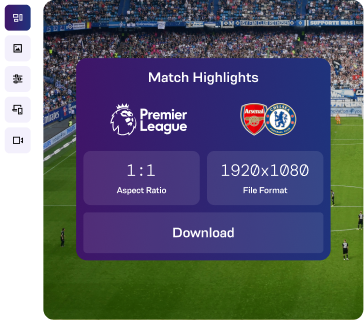
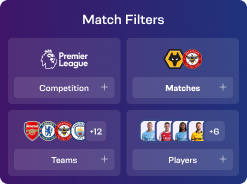
This is where Opta comes in. Earlier this summer we launched Opta Pulse, which not only connects Opta’s vast historical 7.3+ petabyte sports database to video, but also incorporates AI-optimised workflows and search functionality to help source underutilised archive clips to help fans reconnect with moments from the past.
As well as identifying key moments, Opta Pulse’s workflow also enables a creator to produce and distribute clips, optimised for different social channels, simultaneously and make them more discoverable by synching metadata.
This means that Opta Pulse acts not only as a key to unlocking your club or competition’s history, but can also enable you to optimise the content you produce to its full potential.






Monetise moments you have already created
Audience engagement is only one part of the opportunity. Archive content can also contribute directly to a rights holder’s wider commercial strategy.
There are opportunities in sponsorship too.
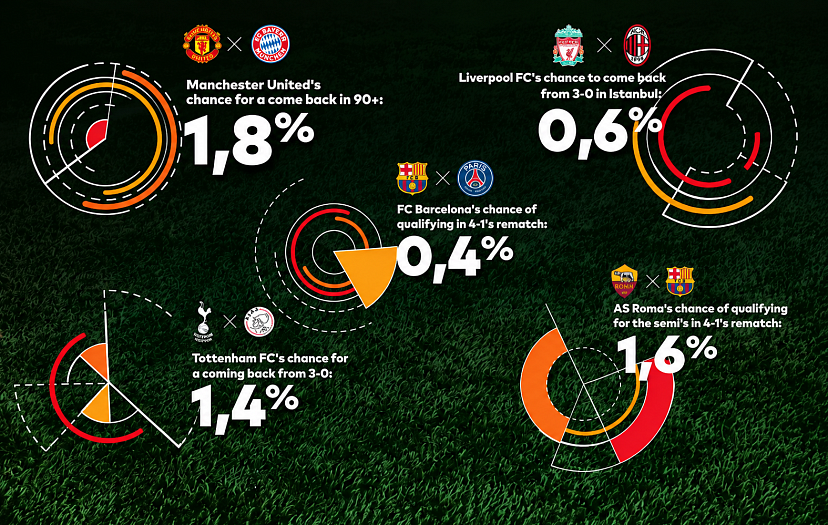
Ahead of the 2021 UEFA Champions League final between Manchester City and Chelsea, Opta supported Mastercard’s Priceless Comebacks in Football campaign.
Historical Opta data was used to identify the probability of teams recovering from unlikely deficits in previous Champions League matches, helping power a film which generated more than half a million views on YouTube.
Archive provides brands with something particularly valuable: an opportunity to associate themselves with sporting moments audiences already care about.
And rather than creating an entirely new story around a sponsorship proposition, rights holders can begin with thousands of stories already sitting within their archive.
Powering the next generation of sports storytelling
Archive has a role beyond short-form and social content.
When The Last Dance premiered on Netflix, the Chicago Bulls leveraged the power of the documentary to generate 366 million social impressions related to the series.
The success of The Last Dance, and other historical sporting documentaries which have aired in the years since, further reinforces the untapped potential of video sitting in the vaults of rights holders.
As referenced by VizRT’s Andy O’Neill at the recent Opta Forum: “There are a lot of sports entities out there who still have archives sat on tapes, sat on hard drives, that want to be able to do something with it, a shocking amount actually. And there is money there to be made.”
For a rights holder looking to produce either their own documentary content in-house, or to collaborate with a third-party, the combination of Opta data and Opta Pulse offers a tantalising opportunity to cut down research time from weeks to hours – speeding up production time and generating significant cost savings as a result.
From archive to asset
Every match creates new moments. But the value of those moments doesn’t disappear when the next fixture begins.
For rights holders, decades of goals, saves, celebrations, rivalries and iconic performances represent an enormous library of stories that audiences already have an emotional connection with.
The opportunity now is to make those moments as easy to discover, create and distribute as today’s highlights.
That means thinking differently about what an archive represents. Not simply somewhere to preserve the history of a competition. Not simply footage to revisit on anniversaries - but an always-on content engine capable of driving audience engagement, strengthening subscription propositions, supporting partners, powering new storytelling formats and generating new commercial opportunities.
Your archive shouldn't simply preserve the value of your sporting history. It should continue creating value from it.
And by connecting structured Opta data with video through Opta Pulse, we believe rights holders can finally start unlocking more of that potential.
-------------------
Nick Pomeroy is Product Director of OptaAI Studio and Opta Pulse. Prior to joining Stats Perform, he worked as Principal Product Manager at BBC Sport for Digital Products and Experiences for approaching five years.
For more information about Opta Pulse, please get in touch.